
Jack Adler's Video Library
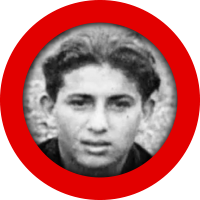
Jack Adler
Transcript
Jack Adler: Well, as I stated, my father was one of 10 children. And he was the only one who belonged to the Hasidic sect of the Judaism. The rest did not. So-- and in my grandfather's home, it was primarily like in a Reform Jewish household. Whereas at my house, it was more Orthodox oriented.
[...]
Personally, I remember, probably since age six or seven, I was very rebellious to-- towards the Hasidic movement per se, because they had certain traditions which, to me, did not appeal. So I was a little rebel, I would describe myself. I was more apt to look up to the Reform movement of Judaism than the Hasidic movement.
Interviewer: When you say you were rebellious, how would you describe your rebellion?
Jack Adler: Well, for instance I wouldn't-- you know those side curls some Hasidic boys wear? I would never-- I would cut them off. I wouldn't wear them. I never cared for them. Stuff like that.
Interviewer: And what did that create for you within your own family? Was there conflict as a result?
Jack Adler: I was known and called as the rebel in the family. Oh, yeah, even at six, seven years of age.
Interviewer: And your sisters and your other brother, how did they respond to—
Jack Adler: They followed the tradition of the Hasidic household.
Interviewer: So you were the only one.
Jack Adler: I was the only one.
Chapter 1: Life in Pabianice before the war
Transcript
Jack Adler: My brother, I remember-- attended-- he was six years older than I. He attended the yeshiva, so he used to practically go-- leave the house in the morning and come home very late at night. My other two sisters-- my older sister attended school, of course, as-- and towards-- when the war broke out, my youngest one, I believe, was in first grade. And we got along nicely. They had friends. I had brought friends. We all got along, played together, walked together to parks or what have you.
[...]
I went to two schools. I went to public school, and I also went to cheder, which is a parochial school in Pabianice. So I actually attended public school in the morning. Then in the afternoons, I went straight to cheder, and I wouldn't get home till late in the afternoon.
Interviewer: OK. And what, what are your recollections, what are your memories, of your early school experience? What was it like to go to school?
Jack Adler: I enjoyed school. I-- at home, education was stressed an awful lot. So we accepted this as an important part of our life and of our growing up. So we did not-- none of us rebelled towards any education hardships, as far as not being able to play because I had to go to cheder right after public school. So, no. Education-- I enjoyed education, whether it was public or parochial.
Interviewer: And what was the difference between the public school and the cheder? And what do you see as the big differences?
Jack Adler: Well, the difference was in public school, of course, we spoke Polish and we learned all the Polish history, and what have you. Polish language, how to read and write in Polish. Whereas in cheder, it was more religious, of course, oriented. And we learned Hebrew, and the Bible, and so on.
Chapter 2: School years
Transcript
Jack Adler: I would say a few months before World War II broke out and-- and I'm making reference to September, 1939-- there were a lot of rumors going around, what's going on in Germany, with Hitler kind of having come-- and I had no direct conversations with anyone, but I could overhear adults talk about it. Or even my mother and father at home talk about it. And, and the Jewish population, of course, became fearful what is going to happen. And this was prior to Hitler declaring war on Poland. Stuff like that. And the-- some people made alternative plans, should anything happen, where Germany would occupy Poland. And my family, unfortunately, only one of the 10 children did so. And they escaped to the Soviet Union then. And that's how they survived.
[...]
Jack Adler: Well, we had radios at home. Of course, it was before television. So-- and my family was, I would say, middle class or maybe a little above middle class. So they had access to radios and communication with other people who were non-Jews, who exchanged the news with them, what they learned was going on. Especially we focused, of course, in those months prior to the war-- or years when-- since Hitler came to power, in Germany, what's going on in Germany.
Interviewer: So you were paying particular attention—
Jack Adler: Exactly.
Interviewer: --to those activities.
Jack Adler: Most definitely.
Interviewer: Do you remember your family coming together at times like that, and listening together, or doing that as a family activity, where you would try to stay on top of what was happening?
Jack Adler: They did, but of course, they excluded the youngsters. They didn't want us to be made aware of anything so negative that was going on in Germany.
Interviewer: OK. So as 1939 begins to come in, what were some of the first changes that you remember?
Jack Adler: Well, I remember they took people-- asked for volunteers to dig ditches, zig-zagged ditches, like, anti-tank, anti-weapons, supposedly, whatever it was. And this was before-- I would say it probably was August of 1939, or even maybe July.
They must have had some indications that Hitler may attack Poland. [PAUSES FOR 4 SECONDS] And people were worried, you know? And they, they had a draft. They drafted many youth who were of age into the Polish Army.
Interviewer: Including Jewish youth?
Jack Adler: Oh, yes. Most definitely. The Klenietz, my two cousins, were drafted into the Army.
Interviewer: And what about your brother, who was six years older?
Jack Adler: No, he was not. He was only, then, 16. He was six years older.
Interviewer: So he was still too young.
Jack Adler: Yeah. He was still underage.
Chapter 3: Germany invades Poland, initiating global conflict
Transcript
Jack Adler: I have very vivid memories. I remember, as I stated previously, I was a very curious youngster. And-- and the very first few days, a young kid could still get out there and observe things, more so than an adult. And I remember watching Polish people, neighbors, friends-- whom we considered friends at least-- embracing the-- the German force, occupying forces, handing out flowers, kissing them.
So, you know, I couldn't-- I couldn't in my slightest, wildest I should say, imagination imagine that those people, who are so warm, friendly to each-- towards each other, can be so horrible as the things we've heard that are going on in Germany. But within a-- a day, you could see what was going on. They would surround the temple, take out the Jews, even in the tallis, the prayer shawls.
And as I told you before, we had to dig those ditches. They made us dig, the government, for anti-aircraft or what have you. They made them, with the prayer shawls, get down on their knees, with their hands cover those dishes-- ditches up. If anyone resisted, they were kicked, spat upon. And so we-- we-- we knew that those stories we have heard are coming true.
And on a daily basis, they would, the Germans, would come into Jewish neighborhoods, surround them, and take men and women to work outside the ghetto, various things, factories or what have you. And beatings were the norm almost within a day after the occupation took place, where they would take men and women, chase them with whips, like cattle, into the town square, where they would humiliate them. And if anyone complained, they would kill him, shoot them right on the spot.
And they would laugh for no reason whatsoever, just because they were Jews. And I remember all that quite vividly.
Chapter 4: Nazis occupy Pabianice
Transcript
Jack Adler: Well, I remember in our house, we had what you call like a clothes hamper. But it was a tall, something about this height. I would say it was probably around a couple of feet in diameter. And when they would come in-- as I said, we lived in a courtyard like. So they had to come in through the main gate. And we would have young kids, including myself, who would notify the adults that the Germans are here. And we know what they came in for, to grab some men for work.
And from time to time, I would hide my father in the-- in that little hamper-- I'll never forget that-- and put dirty clothes on top of him. And he escaped. They'll come in, and they look around. They wouldn't ask you because they knew you wouldn't tell them the truth, where the men are. They just walk in the apartment, look around, and they just didn't see anyone, they would walk out.
So I remember that. And [PAUSES] we had to, within, I would say, oh, within-- September, October-- by November of 1939, they moved us into a ghetto. Fortunately, for that period of time, we lived in a section which became part of the ghetto. So we didn't have to move. However, my grandfather, his building was taken away from him almost immediately. It was a nice building. And they moved in with us, my grandfather and my grandmother. [PAUSES]
Something-- the other uncles and aunts escaped to Lódz. They figured Lódz is a bigger city. For whatever reason, they figured it will be safer. And [PAUSES] within a few weeks thereafter, after we were moved into the ghetto, in order for us to obtain food rations, we had to work. The adults had to go out to work, to earn that. There was a black market initially. There were-- because our ghetto in Pabianice was an open ghetto, meaning it was not surrounded by barbed wire.
Chapter 5: Into the Pabianice ghetto, part 1
Transcript
Jack Adler: And twice daily, they allowed us to cross from one side of a street to the next-- once in the morning, once in the afternoon. Subsequently, what the-- we did in the ghetto is we would break through walls from one building to the next so we didn't have to go outside. So we had sort of a underground tunnel from building to building, where we could gather. And they somehow allowed that. They-- they found out, but they didn't care, as long as we didn't go outside.
And in the ghetto, in Pabianice, things weren't too bad. We somehow got sufficient food rations. However, after a while, the rations diminished, got smaller and smaller. And my brother, the oldest, Chaim, he got sick. He got double pneumonia. Then he developed tuberculosis in the ghetto.
And I remember that my mother, who spoke fluent German-- and we had so many friends-- we thought, at least, we had before the war, who were non-Jewish. And she wanted to save my brother. [CRYING, PAUSES]
And, you know, anyone who was found after dark outside walking, outside the ghetto, they shot him on the spot. And she didn't care. I remember one evening, she said she's going out. And my father, we all objected. You know what's going to happen. And she was going. We had no telephones there. So she was going to someone she hoped would help and get her some special food for my brother. [PAUSES]
And she left for two, three hours. And we were worried. And then finally, thank God, she showed up. And she had one egg someone gave her. And she risked her life. [PAUSES, SIGHS]
My brother died in 1942 from complications of his disease. And my mother took it very hard. And she died of a broken heart few months thereafter.
Interviewer: While in the Ghetto?
Jack Adler: In the-- in the Pabianice ghetto. But also, in February of '42, before my mother and brother died, I turned 13, bar mitzvah. And the Jews hid the Torah. They passed it on, you know, from building to building for a special occasions, where they had a minyan. You know what a minyan is, meaning 10 adults to pray?
And so what we did-- it was my bar mitzvah in the ghetto. We had a big wardrobe, from the floor up to the ceiling. And there was a door to another room. So from the outside, they placed the wardrobe against the door so it appears there is no other room. And the-- and my bar mitzvah was in, with a minyan, 10 people, behind. [PAUSES, CRYING]
Chapter 5: Into the Pabianice ghetto, part 2
Transcript
Jack Adler: Oh, I believe about July or August 1942, all the occupants of the ghetto were notified by the German authorities, and again-- and by the Jewish gemeynde, you know, the association of the Jews-- that 2 o'clock a certain date-- I don't know the exact date-- we have to-- each one is entitled to take along one piece of luggage and-- and wait in front, on a main street, in front of the building where we lived.
And 2 o'clock, hundreds of Germans, Nazis, Wehrmacht, came, and they marched us to that football field owned by that Krusche & Ender I mentioned before, who owned that factory in Pabianice. It was a soccer field. The field was divided by a rope into two halves. And [PAUSES FOR 5 SECONDS] the population of the ghetto was divided into two categories, A and B. A were told, that group of people were told, which consisted of the old, sick, young-- very young, babies and so on-- that the reason they got in A is-- they're going to be in the other half of the field-- is because they will be the first one to leave the transport. After all, they are old, and sick, and young.
B were the more stronger, the able-bodied people-- men and women. And sure enough, for the group A, trucks came within an hour or so after we got into that field, in the football field. And they were loaded into those trucks, the people-- truck after truck after truck. And then they came to-- the Germans came by to the unit B, the other half, because we were the last to be transported out of Pabianice.
And they asked for volunteers to clean up because in A there were many sick people. There were many children-- to clean up the debris left behind. So I volunteered. So they gave me like a baby carriage to pick up stuff and to carry it. They had like a not a dumpster, but a pile of-- where they wanted us to leave that.
And my sister, little sister was still there. At that time she was nine years old. So I put her in this buggy, in this carriage, put papers and whatever I could find on top, and pushed it across. I called for my father, who was on the other side, and pushed her across. And she went with us to the ghetto of Lodz.
And the people who were in A, group A, all of them were taken to Majdanek and Treblinka [read: Chelmno], where they were-- where they all died within hours after they left Pabianice.
Chapter 6: The Lodz ghetto
Transcript
Jack Adler: Well, the ghetto, first of all, the population was getting smaller and smaller. People were dying off, and there were, you know, taken out of the ghetto many people. As I said, when the ghetto was being officially liquidated, there were around 68,000 from an overall population in excess of 200,000.
And one day, we were ordered [SIGHS] to report, I believe about 5,000 per day, to the railroad station. Take along whatever you want. [PAUSES FOR 3 SECONDS] And upon arrival at the railroad station, [PAUSES FOR 3 SECONDS] there was, if you will, like a convoy of cattle cars lined up. They put planks on, so you could walk up into it.
And they herded us into those cars like cattle. Maximum capacity, standing room only. They didn't tell us where they were-- they told us we're going to Germany. We're going to work there, because the Russians are moving on to Poland. They're going to save us from the Russians. And that we'll be OK. We're going together with whatever family was left at that point to Germany.
And when each car was filled up to maximum capacity, they [were] sealed off from the outside. And we traveled, I believe, for about two, two and 1/2 days.
Chapter 7: Liquidation of the Lodz ghetto, deportation to Auschwitz
Transcript
Jack Adler: However, the very first night in Birkenau, when I went to the latrine-- and the latrine was as big as this apartment, come-- you know. They had holes in the sides. And in the middle, you had water running.
Someone shouted my name. And I turned around. I recognized him to be a friend of the family. He says, your father's looking for you. What barrack number are you in? And when I told him, being an adult, I guess he recognized what that barrack was. So he took me by the hand, and he says, I'll take you to your father. And sure enough, he did.
We were in barracks, my father and I, in Auschwitz-Birkenau. They-- we were told they used to use for a horse stables. So there was a clay floor, divided in the center, like a chimney. And instead of going up, it went across the room and divided. And there were 700 people-- 750 people-- sleeping on the ground, on each side.
In the barracks, in Auschwitz-Birkenau, we did have appells. Each morning, you had to fall out and be counted. And the first day, when I went back to my father, of course, there was one prisoner too many. And the guy, the German who was doing the counting, shouted, the one who doesn't belong here step forward at once! And of course, my father wouldn't allow me to do so.
So after recounting, you know they had to count every barracks to see where-- if someone is missing. Word came that there is a young boy missing in my place. So fortunately, the German was tired by then. He was out for about two, two and 1/2 hours, waiting for all the counting to be done. So he marched up and down the 1,500 in my barrack, looked at the first young-looking face, and pulled him out and sent him in my place.
Chapter 7: Auschwitz-Birkenau
Transcript
Jack Adler: And we had to go through those selection processes again. Every day, they would select prisoners to be sent to various concentration camps. After two weeks in Auschwitz-Birkenau, my father and I were selected to be sent to Dachau, what turned out to be.
There was one problem. You see, those 50 boys, this was all in '44-- the Germans knew they were losing the war, so they tried to waste as little time as possible to complete their evil task. So the 50 boys weren't tattooed. I didn't have a number. I don't have a number.
And the process was when you were selected, the group that was selected to go to various concentration camps, you had to walk up to a table where an SS officer sat behind with a list, and you had to shout out the number you had tattooed. So my father told me when I come up to use the next consecutive-- [SOB] excuse me. [PAUSES FOR 3 SECONDS] To use the next consecutive number to his.
And his was 96037. So when I came up, they asked your number. I said, “96038.” And that's how I got out from Auschwitz-Birkenau.
Chapter 8: Forced labor in Germany - Auschwitz to Kaufering
Transcript
Jack Adler: We-- we arrived in Dachau, in the city of Kaufering, Germany. Kaufering, which was under the jurisdiction of Dachau, the main camp, which was Dachau, which was only a few kilometers away, was erected, constructed specifically for the Jews from the ghetto. And they had 10 camps, 1 through 10. And my father and I were assigned to camp number four. And those barracks in-- in Birkenau, you had to walk down about three or four steps. The only thing you could see from the outside was a V-shaped roof, and grass grew on the roof.
And you-- and then as you marched down, there was a long hallway. There were shelves, like, on each side, where about 50 prisoners slept on each side, side by side. And at the end of the barracks, there was a window. [PAUSES FOR 3 SECONDS] And immediately, we were assigned to work at Kommando Mohl, M-O-H-L. They were constructing underground hangars for the German Air Force, so that they cannot be seen from the air. Because in 1944-- in 1945, the American and British air forces were bombing Germany around the clock. [PAUSES FOR 3 SECONDS]
And they should have only bombed Auschwitz and Dachau, but-- and they were aware of it, and they did not do anything about it. And that's another story. We know the names who were responsible by now for it, for this indecision.
So, my father and I were assigned to carry cement bags as they arrived by rail to the construction site, from the rail to the construction site. [PAUSES FOR 3 SECONDS]
Chapter 8: Forced labor in Germany - Kaufering
Transcript
Jack Adler: So one day, the commanding officer, who was a colonel in the SS, and he was in charge of the construction site of his people, you know, and of all the guards, the SS guards. Called my Kapo, and he asked him to send some-- a youngster to keep his office clean. And being the youngest in my group, I was chosen for that job, which was, by far, much easier.
And I remember, I would come in to perform my duty, the first thing I would do would empty out the ashes, so it doesn't mess up the floor after I sweep. And I would find, neatly wrapped in the ashes, like in the wax paper-- that's before foil paper-- pieces of bread, pieces of, like, bacon. He would wrap it up.
And I knew he did it-- he wouldn't have thrown it in if he wouldn't want me to find it, for me to find. And that was like, you know, like a special gift. Every day, I would find something in there.
Chapter 9: Dachau - a lifesaving promise, part 1
Transcript
Jack Adler: And I remember, about a month before the war was coming to an end-- and of course the Germans realized that the end is coming-- they allowed the Swiss Red Cross to come into the main camp of Dachau to distribute food packages similar to, like, a care package. So first they handed them out to the non-Jews. And they had some leftover, so they decided to give those to the young prisoners. And I received one of those packages.
And immediately, you opened it up, took out all of its contents, and put it around your waistband, so no one-- because people would steal your food. And it had-- it had sardines, crackers, a candy bar, I remember. That, I ate up immediately. It had all kinds of non-perishables.
And when we-- we marched to work, five across. Approximately, I would say, about 2,000 people, to and from work. We marched for about an hour and marched for an hour back.
The daily routine, even before going to the main camp of Dachau was that we would wake up around 5:00 in the morning, clean up the barracks. We had to fall out in front for the appell, to be counted. And at 6:00, as we marched out to go to work, we were given a half of our daily food ration, which was a slice of bread. And we marched for an hour. 7 o'clock, we started work.
At noon, we got a bowl of soup. And at 7:00 at night, we marched back to work for another hour. And they always found in camp to do something, some-- something ridiculous, so we don't go to sleep till about, oh, before midnight. 5:00 in the morning, the same routine. They'll--
Interviewer: What kind of soup? What was in the soup?
Jack Adler: Very thin. Water, sometimes vegetables, maybe potatoes in there. Sometimes meat. [PAUSES FOR 3 SECONDS] So and this was the daily routine. And of course, those who were too weak or got sick never got the food, because we got the ration. They had it so worked out that you got a ration as you left and at work. So, people who did not go to work died within a few days. [PAUSES FOR 3 SECONDS]
So, they distributed those packages as we were marching to work, five across. One of our SS guards approached me. And he asked me if I received a food package. I said, “Yes, I did.” He said, “Was there any sugar in it?” And there was a bag, maybe of about two, three pounds. I don't recall exactly.
And so, he opened-- he carried a little duffel bag. He opened it up. He took out what appeared to be like a half a loaf of bread. He said, “If you give me your sugar, every day, I'll give you this much bread.” And boy, this was like Thanksgiving, Christmas, all the holidays. I gladly turned it over to him. And he gave me the bread.
So, the next day, as I said, we marched five across. I made sure I'm on the side that he was guarding us, so he could see me. So, as he passed me by, he looked at me. I looked at him. And he asked me in German, [NON-ENGLISH]. “What do you want?” I said, “You promised me bread every day. I gave you sugar yesterday.”
And he-- instead, he took off the rifle he was carrying, and with the rifle butt, he hit me as hard as he could in my rib cage, and I collapsed. So, two people helped me get to work. And I-- when I went to perform my duties in the commanding officer's office, I bent down to empty out the ashes, and I was in such pain, I couldn't get up. [PAUSES FOR 3 SECONDS]
And I started to cry. And the commanding officer got up from behind the desk, walked up to me. And he said in German, [NON-ENGLISH], “What's wrong with you, young boy, my boy?” And that's the first time in maybe five years that German would address me as a human being. And at that point, even though I realized what could happen to a Jew informing on an SS guard to a superior officer, I didn't care about that. And I told him.
And he said, what? He said, when we fall in-- we had fall in again into appell to be counted before we marched back to camp--he says, “Point the guard out to me.” So, I said to myself, it's like signing my death certificate.
So, I hid to the rear of the group of the prisoners. And we were counted. Everything was in order, and we were ready to march. He said, “Halt.” ‘Hold it.’ And I-- he went row by row, and he was looking for me. He spotted me. He called me out front.
He says, “Show me the guard. Point him out to me.” Reluctantly, I did so. So marching back to camp, I hid in the middle of the group, so the guard doesn't see me. Nothing happened.
The next day, the same thing. I'm hiding in the middle there as we were marching. And I could see out of the corner of my eye this guard is looking, row after row. He spotted me. He called me out. I said, “Oh, boy. Here comes another beating or maybe even-- even worse.” And instead, he opened his duffel bag and handed me like a half a loaf of bread. I couldn't believe it.
And when I got to work, I was so happy. You know. I went into the commanding officer's office. Before I even closed the door, he got up from behind the desk. He said, “Did you get any bread today from this guard?” I said, “Yes, sir.” He said, “If you still have it, show me how much.” And I did. So I showed it to him.
He says, “Every day, he is to give you at least this much bread. If he fails to do so even one day, you tell me, and I'll deal with him.”
And this is very important. Because you know, as you well know, I speak to so many children, thousands each year. I don't want them to believe in collective guilt. There is good and bad in all of us. And he, in his small way, did what was right, as far as I was concerned. He saved my life. Because I would have-- I would have never survived without his help.
Chapter 9: Dachau - a lifesaving promise, part 2
Transcript
Interviewer: The commandant of the camp--
Jack Adler: Commanding officer.
Interviewer: --who took you in and, and gave you extra bread and --
Jack Adler: Mm-hm, most definitely.
Interviewer: --pieces of bacon and--
Jack Adler: Uh-huh?
Interviewer: --what is your understanding about what was taking place, there?
Jack Adler: Well-- well, you know, you have to-- now, of course, 50-some years later, and I have learned a lot about that particular dark period. I think, you know, as I said, I don't believe in collective guilt. I do not. And I don't think anyone should, for that matter.
I think he was a decent human being who got caught in that murder machine. And when he found out what was going on, it was too late. And he did, in his own way, whatever he felt he could, even though it was just one individual-- myself. And he saved my life. There's no question of it. In the condition I was when I was liberated, had I not had the nourishment that was provided prior to that, I would not have made it.
Interviewer: Do you remember his name?
Jack Adler: No. I know he was a-- you know, when I was hospitalized, I was thinking about him. But when I came out, I tried finding him. I-- I didn't know his name. I didn't know anything about him, other than that he was the head of the guards at the-- at work camp.
Chapter 9: Dachau - a lifesaving promise, part 3
Transcript
Jack Adler: Well, as for myself, you know, as we worked, towards the end, before the war ended, there were daily air raids. So they would stop. Initially, I worked on the night shift. So they turned off all the lights, of course, and you were dispersed. And you could lie down– sit down. Because nobody would bother you. They was as scared as you were. Maybe we weren’t that scared as they were.
And I– you wished, you know, many times– you know, I don’t– I didn’t believe in suicide. Many people did. I think I wouldn’t mind– though, at the time, maybe going to sleep and not waking up, but I wouldn’t take my own life. And you know, you had mixed feelings– you know, why, and how much longer, and stuff like that went always through your mind, you know? Especially when you had time to think without being disturbed.
And the air raids were an indirect blessing for us. They would last, like, an hour. The sirens would go off and on, you know? It was even more peaceful then than being in camp. Because nobody bothered you at that particular point.
Chapter 10: Last days of the war - death march and liberation, part 1
Transcript
Jack Adler: We remained in the main camp of Dachau till about April, I would say 27, of 1945. And all able-bodied men in my group-- there were about 10,000 of us that were marched out of Dachau-- which was later on known as the death march-- we marched all during daylight hours. At night, they would put us-- put into woods.
There were many Russian POWs. There were many Christians among us. And you could hear machine gun fire go every night, killing groups of people. We were liberated on May 1, 1945, from the original group of 10,000. There was less than 4,000 left. And people were dying while we were being liberated. I'll never forget.
On May 1, we got up, and I could hear the older people [PAUSES FOR 3 SECONDS] saying things, “Yalla”, meaning in Hebrew, [AR1] ‘They’re gone.’ And I said, “Who's gone?” And sure enough, all the young SS officers were gone who were guarding us. They left behind the Wehrmacht.
And a few minutes later, two German Red Cross trucks pulled up. And they opened up the gate, and they called us for hot milk and bread. And no one would get up. We thought they're going to poison us.
So the German realized what was going on. So he drank the milk and bit into the bread. And then those who were able to get up went over there and-- and got some bread and milk. And within a few minutes later, the American tanks pulled up.
And I was immediately taken by the Red Cross. I weighed, at that point, 66 pounds. I was 16 years old. I was hospitalized with double pneumonia and suffering from malnutrition.
Interviewer: Let me ask you this, Jack. When you first saw the Americans come, what was that like? What did that mean to you?
Jack Adler: I didn't-- I know something good is happening, but I never saw an American soldier. And you know, the tanks, with those stars, look the same, like the Russian tanks. I didn't know if they are Russians or-- but of course, once they got off, and they approached us, they spoke English, of course.
Interviewer: And did you realize what was happening?
Jack Adler: Oh, yeah. They said that the war is over, and all the Germans surrendered, of course, those who were left behind, the German guards.
Interviewer: So it sounds like part of you was in disbelief that this could actually be happening.
Jack Adler: Oh, of course. We were-- we were-- we were so-- the way we lived, in such a helpless and hopeless [PAUSES FOR 3 SECONDS] environment for so many years. It was so difficult. It was hard to comprehend, even, freedom, for a while.
Chapter 10: Last days of the war - death march and liberation, part 2
Transcript
Jack Adler: The hospital was in a– what, later on, became a displaced-persons’ camp, in the city of Foehrenwald, Germany. I think, prior to the liberation, it was a work camp for– where they provided housing for people to live who worked around the area. The doctors– very interesting medical team. I remember– as I stated, I was suffering from– beside malnutrition– I weighed 66 pounds– I– I had high fever. I had double pneumonia. So the nurses wrapped me in– in sheets dipped in ice water and alcohol, to draw out the temperature.
But I remember the rounds, the daily rounds, were– were being made by three doctors. One was an American, one was a Hungarian Nazi– they call them [? Milos– ?] and one was a German doctor. And I remember, they make– you know, there at the beginning, when I was hospitalized, they– you had your chart at the foot of the bed. So they would look at the chart, talk to each other–
And I could barely– I was in such high fever– I had such high fever, I couldn’t keep my eyes open, but I could see, barely, through them. And then they look, and they confer, and they go like this. In other words, he’s a goner. I said, [INAUDIBLE] that’s what you think. [LAUGHS] More or less. You know.
So I was pretty bad off. I was hospitalized, oh, for about 90 days– three months. And I got excellent medical care, by the way. The doctors were good. The nurses were good. We received good food and so on.
Chapter 11: After liberation, part 1
Transcript
Interviewer: Jack, the years– five, six years of life in two ghettos and two camps, witnessing the atrocities around you, the– your family dying around you, all these things happening around you, what kept you going? What– what– what, inside of you, kept you going?
Jack Adler: I tried– I tried to figure this out. But I think, subconsciously, the fact that, as we arrived at Auschwitz-Birkenau and we were being separated, my sisters from my father and me, and my father told us [PAUSES FOR 5 SECONDS] [CRYING] that we’ll meet back home, and not knowing what happened to him or to my sister– it kept you going– yes, you’re– you’re going to survive. I’m going to do that, you know?
Chapter 11: After liberation, part 2
Transcript
Interviewer: --what is your understanding of what took place with your father?
Jack Adler: Well, he-- he continued to work at the same place. What happened eventually-- and I was unaware of it-- just a few days before the war ended, he was sent into the main camp of Dachau, as well, but he probably-- well, he did die there, because I found documentation to that effect after the war.
As a matter of fact, I found it in the Jewish paper in New York, The Forward, believe it or not. They listed names. It's unbelievable. So he just died, I would think, of malnutrition, primarily.
Interviewer: And do you-- do you know how-- what-- what the date was, and--
Jack Adler: They published the date-- March 13, 1945, which would be about six weeks before the war ended.
Interviewer: So six weeks prior to liberation.
Jack Adler: Prior to liberation.
Interviewer: How about other family members--
Jack Adler: Well, my sister-- I found out after the war, my older sister, she died in the camp of Bergen-Belsen concentration camp.
Interviewer: From what?
Jack Adler: Probably the same thing. Most of them who died-- oh, of course, there were many tortured and so on. But those who worked usually died from malnutrition-- you know, starvation.
Interviewer: Aunts, uncles, cousins--
Jack Adler: I have-- as I said, there were five survivors, only one cousin from my father's-side family, and then a-- a cousin who went through the camps.
My aunt, who was my father's sister, she was the only one. Her family did escape to Russia, I mentioned briefly before. And they-- a boy of theirs died. They had a young boy died. And I don't know the circumstances how.
And he and my aunt and uncle, and a daughter who lives in Israel now, they survived. And right after the war, they went back to Poland. They had a candy factory in the city of Kalisz, Poland. And they went back to claim their property, after the war, in Poland. And they were told they have 24 hours to leave Poland, or they will finish what Hitler failed to do.
So they escaped. They went to West Germany and, from West Germany, to Israel. This was after the war.
Interviewer: And how many of your family members perished during the war?
Jack Adler: From our immediate and extended family of 83, five survived.
Chapter 11: After liberation, part 3
Transcript
Jack Adler: Well, we were notified-- and the UNRRA knew first, because they were in charge of the displaced persons camps. So we-- in the office, and I worked in the office. And we were told that Mayer, of Metro-Goldwyn-Mayer-- very few people know about it. You see, in order to come to the United States, you needed a sponsor to guarantee that you would not become a public liability.
Interviewer: Mhm?
Jack Adler: So Metro-Goldwyn-Mayer sponsored, signed for, about 2,000 war orphans-- and I was one of them-- to come to the United States. Very few people know about it.
Interviewer: And when did you arrive?
Jack Adler: I arrived here on Apr-- 'on April!'-- December 22, 1946. I should have been here in July, but there was a strike in between. So we came right afterwards.
Interviewer: And how did you-- how were you transported here?
Jack Adler: By boat. We came on the S.S. Marine Marlin. We arrived at New York, at night. It was, like, 10 o'clock at night. I remember it was dark, and looking up-- we got on top-- on boat, we could see the-- you know, the skyline, the lights. We'd never saw such high-rises and so on.
We had to stay overnight. And the next morning, we were released-- disembarked. And I-- we went to Ellis Island, for a few days. And then, I remember, on boat, on the boat over here, I helped the guy who was in charge of the kitchen set up the table, put the dishes-- silverware. So, when we got off the boat, he gave me a $2 bill-- my first American currency.
And when we went to Ellis Island, they had all kinds of vending machines-- candies and what have you-- goodies, that we hadn't had for a year. So I got $2 worth of nickels and bought as much candy as I could. [LAUGHS]
Chapter 12: In search of a new beginning, part 1
Transcript
Interviewer: Back to post- coming to the United States, and when you first arrived, what were your initial feelings of being on American soil, do you recall?
Jack Adler: Oh, yes, I was very happy. And it was unbelievable, you know, the freedom and-- people-- you know, we-- we were the-- on the second boat after the war. The first one came, I think, in June, and the second one. Then there was a strike. We came in December.
And people used to come in, sign in, on weekends, just to talk to us, to see us. They heard so much about it, and they just wanted to see a living witness of it. You know? By the hundreds, they used to line up.
We were in a reception camp. It was a hotel, not a camp-- a reception area, where we waited to be sent to various foster homes. And people would come in, every weekend. They line up. And they could sign up-- if the people felt comfortable that the child would be safe with someone, they would sign them out, and people would take them to a movie or what have you.
Interviewer: And, at that time, what languages did you speak?
Jack Adler: I could speak Polish, I could speak Yiddish, and that's about the only language, at that particular time, that I could communicate in. Because most of the people who did come in were from Europe, originally, who escaped, some of them. Or those who were Jewish and spoke the Jewish language.
Chapter 12: In search of a new beginning, part 2
Transcript
Jack Adler: From there, I-- I remained in New York for a while. I went to night school, to learn the language. Of course, I didn't speak any English. And I stayed in New York till May 10, 1948. And I was sent to live in a foster home, in Chicago, Illinois.
Interviewer: How would you describe the foster home?
Jack Adler: Great people. I-- I know--
Interviewer: A family?
Jack Adler: A family. They were from-- originally from Europe. And they had three children. They had a son older than I. They had two sons and a daughter. Unfortunately, there was a big tragedy in that family, as well, but they were very nice people. They were very warm, understanding, supporting people.
Interviewer: And how long did you stay with them?
Jack Adler: Well, I stayed-- you see, the problem-- I don't know even if my daughter knows that. They wanted to adopt me, after a while, and I just couldn't-- I-- I felt that it would be a betrayal to my family, because I just couldn't do that. I just couldn't allow myself to do that.
So, I stayed with them while I went to school, and then I lived on my own, with-- in a home. I had a room rented out-- some nice people, again. And I--
After I learned the language, I told my social worker-- each of us was assigned a social worker-- that I would like to go to school. He says, “Well, you have to go to grammar school.” I said, “I'm too old!” At that point, I was like 18 years old.
He says, “Well, if you take an exam, there is a private high school here. And if they accept you, you can go there.” So it was the-- the Central YMCA High School in Chicago, Illinois. So I took my exam, and they accepted me. I went to day school and night school. I graduated in two years.
Chapter 13: Chicago - setting down new roots, part 1
Transcript
Jack Adler: Well, I've been told prior to coming to the United States that this is a land of opportunity. So I tested it, and I have accomplished many things that normally, the average individual would not think about doing. For instance, [PAUSES FOR 3 SECONDS] I was the only non-attorney appointed by the circuit court of Broward County, Florida, to act on receiverships, meaning, when a-- prior-- my specialty was hotels. When a property goes into bankruptcy, foreclosure, they appoint a receiver to take over the property until whatever legalities need to be resolved.
I also, when I had one of those hotels, I had a salesman from a local TV station call on me to advertise, because we had a club there, and rooms, and what have you. So I told him in a joking way. I said, I'll tell you what. I'll trade you. I don't want to buy any advertisement.
So they wanted a suite. I said, OK, I'll give you a suite. In return, I want my own television show. She said, are you kidding me? I said, no.
So he came back a few weeks later with his station manager, Mr. [? Jonas, ?] as matter of fact, was his name. He said, are, are, are you serious with my salesman here? I forgot his name. I told him, I said, of course.
So I showed him around. I had the bell-- one of the bellboys show him the different suites available. And he picked one. He says, I'll tell you what. If I can have this suite, you can have your own show. What kind of show do want?
I say, I, [LAUGHS] I say, I'd like to have a little talk show, you know, interview people, all kinds of people. Have you ever done anything like this? I said, no.
[LAUGHTER]
Can you do it? I says, I think so. I've watched enough television. I think I can do it.
So he gave me a half hour prime time Wednesday night, live. Sundays it was on tape. And I interviewed-- the name of the show was The Three of Us. I had two guests, two 15-minute segments, different guests. And I interviewed people, so drug addicts, rehab people, and Supreme Court justices. So I had fun.
So I always reached out for that challenge, to answer your question. I've done something that was challenging, and then I got tired of it, went to next step to something else.
Chapter 13: Chicago - setting down new roots, part 2
Transcript
Jack Adler: Hate-- excuse me-- it is like a cancer. You have to catch it in its infancy and cut it out. If we fail to do so, like a cancer, hate continues to spread. And when it spreads sort of after a certain point, it starts killing. And we cannot allow that to happen to any group of people.
Interviewer: And the way to stop it is?
Jack Adler: Mutual respect. We are all the same. We may look different, come from different countries, but we are always-- they-- all we have to do is respect each other. We don't have to love each other.
Many families don't get along. We don't even have to like each other. But for our own self-preservation as a human race, we had better learn to respect one another. Only then will we survive. Or else we'll destroy each other, as we have seen destruction going on in various parts of the world, or one group of people against another. And that's 50 years after the Holocaust.
Chapter 14: Hate is a disease, part 1
Transcript
Jack Adler: That's a very good question. And I-- and I-- and you know, as I speak, as you are well aware, to thousands of children, each-- schoolchildren, as well as civic groups, church groups, each year, what I like to say is that, how can we stop the cycle of hatred, prejudices, racism, bigotry, or what have you? I would like you to know my own opinion on it.
And you know, as I tell the children, we live in the greatest nation on the face of the earth-- no doubt about it-- the United States of America. We live in a diverse society. We represent every race, nationality, religious group.
And you know, in order for us to get along, to survive, to be able to preserve this great democracy to generation-- for generations to come, for my grandchildren, and their children, and so on, you know, we don't have to love everyone. I know I don't. We don't even have to like anyone. But if we want to survive and preserve this great nation, we have to learn to respect each other.
There has to be a mutual respect for one's race or nationality or religion or whatever the belief may be, as long as it's a belief. It's sane. It's not something to hurt someone.
And you know, you have people here who ask me, what have you learned since the Holocaust? What did the world learn from it? Unfortunately, nothing positive. If we did, we wouldn't have what's going on in the former Yugoslavia, Liberia, Somalia, Rwanda, Ireland, the Middle East, Sudan. So we didn't know.
We learned one thing, though-- is that hate is an equal opportunity disease. And we better learn how to get rid of that. And we need some medicine to conquer that disease, or else we will destroy each other.
Chapter 14: Hate is a disease, part 2