
Fred Marcus' Video Library
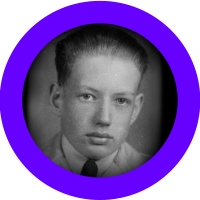
Fred Marcus
Transcript
Fred Marcus: Our lifestyle was very similar to that of American Jews today. My father spoke with pride about the fact that our family had lived in Germany, no, even in Prussia for 200 years. And so we were very assimilated, very integrated into society. And I don’t think that when I was small, other than going to my grandparents’, there was a very pronounced Jewishness or feeling of being Jewish or being different from anybody else. That was all taught to us by the Nazis. […]
[…] being persecuted for being a Jew motivated me to find out more about Judaism. It seemed so preposterous what the Nazis were doing, that all of a sudden, you were an outcast, didn’t belong, had to be thrown out, et cetera, that I really wanted to know more about what it was that I was being persecuted for.”
Chapter 1: Fred's childhood in Berlin
Transcript
It was an all-boys’ school with large classes and I would say between 35 and 40 kids. And I entered that school in the fifth grade, having skipped the fourth, because of that private school. This was the school year of 1933-1934. And some significant events took place that made me aware of how Germany was changing. One was when one of our teachers entered. In Europe, to this day, it is customary for kids to stand up by their seats when the teacher enters. And the teacher will say, good morning, please be seated. And we do it in this country only when a judge enters in the chambers. But you do it every period; when the teacher comes in, you stand up. And as of one day, the greeting, from “Good morning,” changed to “Heil Hitler.” And I remember this strange feeling. By that time, I was nine years old. I knew already, of course, what was going on, that I had to stand there and lift my hand and mumble “Heil Hitler.”
The other experience I want to share is very important in my life, concerns music lessons. We had music twice a week. We went to a music room, which was just like any other room, except that it had a piano in it. And a very nice teacher with a great, big mustache was our music teacher.
And his pedagogy and classroom management consisted of ‘rewarding’ us—if we were a school group here now, the kids would all titter—by letting us choose the closing song at the end of every lesson: “Well, boys, you have been very good today. You may choose the closing song.”
And invariably, my classmates chose to sing the Nazi marching song known as the “Horst-Wessel-Lied“, which they sang all verses. Horst Wessel was a young fellow who was stabbed to death in one of the street fights between Communists and Nazis during the 1920s. And with his death, the Nazi movement had its martyr. If you want to arouse people’s emotions, it’s very important to have a martyr.
They had a martyr, you know, and—and they glorified him, and they wrote this marching song about him. And it has many stanzas—marching songs, by their nature, have to have many stanzas, so you can keep marching—and one of them is indelibly inscribed on my soul and in my memory, are the words, “Wenn’s Judenblut vom Messer spritzt, dann geht’s noch mal so gut.” “When the blood of the Jews runs off our knives, things will go twice as well.”
And twice every week, my beloved classmates—the leaders in the class, the Nazis in the class—and they weren’t all Nazis—yelled out that song, and twice a week, they sang that at me, while I and my five, six other Jewish classmates sat down with our heads bowed, and in great pain and embarrassment.
I had totally blocked this experience until I we came to San Jose, California, in 1964—I remember the year—as director of education of a large synagogue there, Temple Emanuel. And the rabbi, in the spur of the moment—who has been my mentor all my life, still is—asked me to come and speak to the confirmation class, one sunny Sunday morning.
And it was a small class, about 20 some kids. And I remember sitting at the table with them and talking just like I am talking to you now. And all of a sudden, out of nowhere, came that experience. And it was so powerful that at the—at the end of relating it for the first time after 30 years, I blushed. The pain, the anger, and the embarrassment were still so strong.
And I kept blushing for maybe five or six times. It’s the proof of modern psychiatry working and psychology working. Once you talk it out, now I can talk it—talk about it with equanimity. But I couldn’t do that at that time.
And you might ask, why did that teacher not suggest once, “Well, fellows, we sang—sang the same song. Why don’t you pick something else?” He knew what was going on. And the simple answer is, already, in 1933, he was afraid.
That was the climate in which we lived. That even a teacher was afraid to say something that might be construed against the Nazi government, which some kid would repeat to his father who is a Nazi functionary, and the man might have been reprimanded, or he might have been taken into ‘protective custody’ for some time, just because he wouldn’t let this Nazi anthem be sung in his classroom.
Chapter 2: Antisemitism in the classroom
Transcript
And one day, I came to my favorite movie house, second-run movie, not—not one of those big palaces. And I see a sign in the window, where the lady sits in the glass box office, right there where the show times are. And it says very politely, in German, “Juden unerwünscht.” ‘Jews not wanted.’ Not prohibited; it was not a—but it was a sign that said “Juden unerwünscht.” And so standing there, with my money in my pocket, having carefully planned what movie to see, what time to go, all by myself on the sidewalk, looking at that sign, I had my first identity crisis as a Jew.
And I will tell the second movie story, […] which is related to my mother’s death. She died very early, at age 51. And strange as it may sound, one could say that her death saved my life and that of my father, at least for a limited time. Anyway, after she had been buried, cremated, many of our non-Jewish friends extended themselves to—and in 1938, there was still social contact freely going on. Everybody had non-Jewish friends, like American Jews have non-Jewish friends.
And they wanted to do something nice for me, and they invited me over to their house for coffee and cake. And afterwards, as a treat, they were going to take me to the movie, to movies, and this was the downtown movies with neon signs and marble lobby and all that.
And when we got there, the same sign that I had seen in the little theater was, of course, in the window there. And when I saw it, I said to my hosts, a couple, I said, “Thank you very much for coffee and cake, but I think I better leave now.” “Why? Don’t you want to go to the movies with us?” I said, “Well, they don’t want me here.”
And so, as in the first instance, in the second instance I refused to go in. And they complained to my father by telephone that I was a very ungrateful kid. They were trying to do something nice for me, and I would not even accept their hospitality.
Interesting sidelight is that when these first restrictions appeared, the Nuremberg Laws, so that a—a Christian could not marry a Jew, the Aryan purity laws, or these movie things, you know, they explained to me, even those two people. She says, “You know, they don’t mean that. They just have to put the sign there, because if they don’t, they get into trouble with the Nazis. You can come in. It’s just a—you know. They don’t mean that.” But I would not go.
Chapter 3: Many establishments ban Jews...
Transcript
And Herbert looked white as a sheet. And I said to him, “Herbert, what’s the matter with you, are you sick?” “Mm.” “You had trouble with your parents this morning?” “Mm-mm.” “Well, what’s wrong with you?” “Nah.” He was very uncommunicative.
When we completed our journey four stops later, and got off and got out into the open, he stopped me in the street and he said, “You know where the train goes by at the Synagogue Fasanenstrasse?” One of the major synagogues. The train goes right by, elevated. “You can look into there,” he said. “When I went by, the synagogue was burning, and the fire department was there, but it looked like they weren’t doing very much.”
And as we got to school, every child who had passed—every kid in school who had passed a synagogue reported that that synagogue had been set afire, including the Levetzowstrasse, where the pictures of which I showed you earlier. On that night, 80% or 90% of all synagogues in Germany were set afire for some subterfuge reason, which we don’t need to get into here right now.
But that was the beginning of the end. And I don’t know whether it was on that occasion or another one where it was deemed too dangerous to keep several hundred Jewish children in the school building at one time. And I remember very distinctly a little door being opened to the main gate—a wooden—great, wooden double doors and a little opening—with our school director, Dr. Bobby Stern, standing by the door.
We were divided into those who had to go out to the left and those who go out to the right. And he would let out two kids left, two kids right, and he’d look down the street until they had turned the corners. Then the next two kids. Because they were afraid to let us all go en masse, you know, several hundred kids coming out into the street.
Chapter 4: Kristallnacht: an unmistakable turning point
Transcript
But what happened to the unfortunate people in Poland, for instance, when the Nazis invaded Poland in 1939, in that they got this whole package of anti-Jewish legislation overnight. In Germany, it happened over a period of five or six years, and it was gradually, gradually, gradually, gradually tightening the screws, until, I mentioned earlier, that economic law came out.
So that people became less and less optimistic, and the smart ones started to leave in ’33 and ’34, but others didn’t. And in our family, my family, there was no serious talk about leaving Germany, because we just knew Mom wouldn’t make it. She could not be transplanted.
So when she died, and my dad got over the shock—and it just devastated him. I have some pictures I looked at here in preparation for our meeting. The man looks just devastated. Gray and old all of a sudden. But, when he got over the shock, he [Semmy Marcus, Fred’s father] decided it was time for us to leave, in conjunction with my uncle and his two sons, who, by the way, still live in San Francisco. And the choices that were available, this fed into the Nazi mill, too. Where could a Jew go in 1938?
It sounds ridiculous, but we talked about Bolivia, Paraguay, Uruguay, Madagascar, Chile, and yes, Shanghai. Being an international city, open to the whole world, a haven for gangsters and any people on the lam who wanted to disappear, because you could go there without any papers.
And so I remember going down to Unter den Linden to one of the nice cruise companies. In those days, the cruise companies sold directly to the public, and asking for two one-way—one-way tickets to Shanghai, and being told in late ’38, yes, we could go the end of March 1939, as the clouds of war were already gathering. And there were three berths available. So my dad and I went, and we took one of my uncle’s sons, and he had to come on a later boat because we couldn’t get four berths together.
The household was liquidated. We moved into a furnished room with another nice Jewish family. The Jewish family did that to raise their income a little bit. They rented a room, that extra bedroom was rented to somebody. And we spent the last few—a month in that room, until the time came to leave.
Chapter 5: Preparing to leave Germany
Transcript
Chapter 6: Passage from Berlin to Shanghai
Transcript
And the first thing, we’re led—we have a picture of this in one of these books, by the way—we are led on a plank onto a flatbed truck with a few sides. And we are carted, standing, into a bombed-out neighborhood of Shanghai that is called Hongkew, and which was the scene of fighting between Chinese and Japanese outside the International Settlement in 1937.
And that stood like a bombed-out war zone, and a few buildings remained. And we were taken to one of these red brick school buildings and put into a room with 29 double-decker bunks, upstairs and downstairs. “You take the upper one,” my dad said, of course.
And I had to be in the [INAUDIBLE] metal bedsteads, black metal things. And Dad got very incensed the first night. As soon as the lights went out, some of the younger people were telling dirty jokes, the likes of which I had never heard. And I could feel the whole bed shaking as he jumped out into the—yelled into the darkness, “There are younger people in this room! Why don’t you just shut up!” And I was terribly embarrassed that my father should do that. […]
So when we arrived and got off the truck and were shown to our bunks, they announced that it was too late for dinner. And the vision of that table in the ship’s dining room is very vivid. It had upturned corners, so if there was a storm, things would not roll off the table, and beautiful linen. We were taken into the dining shed, and we were given a piece of bread with a single sardine on it. And I believe it was margarine, which I refuse to eat to this day, and a mug of tepid tea, pre-sweetened.
And I can remember that the enamel on the mug was chipped, and the black metal was showing through. And I took a bite, and I took a sip, and all of a sudden, I could feel the tears running down my cheeks. I wasn’t really aware I was crying. I wanted to cry, but I could feel the tears running down my cheeks, and I—they mingled on my lips—the taste of the salt of my tears mingled with this. It was just such a shock to go from one world into that of being a refugee.
And fiendishly enough, they—our Nazi passports—we had German passports to leave the country— had in their front page where the name is, a big red J stamped into it. And the bend of the J, a date was written that was 30 days after you left Germany. So 30 days after leaving Germany, a few days after arriving in Shanghai, I became a stateless refugee and remained such until 1951.
Chapter 7: Shanghai: introduction to a new life
Transcript
And so we became [NON-ENGLISH] persons. We Jews had to control our fellow Jews not going beyond that certain point. And you’ve got a rope around your neck and the wooden batons. They give you a sort of a thing as an authority. And every week you had to put in two or three hours standing there, controlling your fellow Jews going in and out. So they didn’t have any gates.
But the living conditions for many, not everybody, were abominable. Some people had built houses, bought houses, reconstituted houses. But others, great numbers lived in camps with still 30, 40 people in a room in double-decker bunks. And we lived sort of in a half situation, where we had a private room. As soon as my dad died, they put another man in with me, because I couldn’t be just one person in a room–with very unsanitary conditions, but better than being in the camp.
So living conditions were abominable. Many people were unable to earn a living. And so the camps all had soup kitchens, and every Jewish inhabitant of Hongkew had the choice of getting a subsidy in cash—that means you took responsibility for buying your own food and cooking it—or to traipse once a day to the nearby camp with food stamps and get where much—how many stamps, you had so many scoops of whatever in huge cauldrons what, what was cooked for you. That’s what I did then after my dad died.
Chapter 8: Life under Japanese occupation - Hongkew ghetto
Transcript
I could not go and visit my father in the hospital. The last I had seen him before the doctor put me to bed was, he seemed better. And it was just like a candle flickers up before being extinguished before it goes out, that last flicker of the candle. And reminiscent of the story of Job, three messengers came. Three people whom I knew very well came to inform me that my dad had passed away, and the first two, seeing me lying there, could not do it.
And it was finally my friend Rabbi Alexander’s father, who was a very strong and wonderful person, who came then and told me that my father had died. And I could not attend his funeral. I was too sick for that. My uncle and my cousins went. My cousin just brought me a copy of what Rabbi Alexander said at the funeral, and I have it someplace.
And I was left alone with a little wardrobe full of his clothes, which I smelled and touched and brushed the dandruff up off. And I literally felt like a driven leaf on the face of the earth—20 years old, no education, no skills, no job, no family, and no nationality.
Chapter 9: Alone in Shanghai, part 1
Transcript
And we were unarmed, but we had to mostly spend time in protecting food supplies, stores of food and coal, et cetera, that we had for the camps. Keep order in the camps. And at these soup kitchens that I mentioned earlier, I was the guy who used to pull out the little date stamp and yell at the cook, “Twice!” “Three times!” “Four times!” And then that’s how many people would get.
I would get, at the end, if there was lots left—it was hard to gauge when you feed several hundred people or 1,000 people, maybe, in each kitchen—there was special, we got a special portion for the police. And I made extra money by selling half of my portion to my roommate, who did take the cash allowance instead of going to the camp, and then he would pay me for it, and—little bit of money, so I made a bit of extra money. It was a pretty poor existence.
And the fire department was a very honorary thing. Prior to Pearl Harbor, the Shanghai Fire Department had a reserve of 100 men who were all officers rank. And 95 or 98 of those were Britishers. And a friend of mine, who got me into it, and I, were the only refugee members who ever became lieutenants in the Shanghai Fire Department. It’s still a great hobby of mine. I learned quite a bit about firefighting.
And then later, during the Japanese occupation, I still had my fire officer’s pass. And when there were acts of terrorism, resulting in streets being blockaded and so on, I could always flash my red fire department pass and be let through the blockade. It didn’t apply with the ghetto, but outside the ghetto, it was possible.
My dad started a business in clothing, men’s clothing materials. We had a lot of refugees going to office buildings. Like your nut man comes around, or the candy man, a lot of refugees went into offices where all the British and the English and the French sat and brought clothing materials with them. They’d sell clothing materials. We were the ones who supplied them with clothing materials. So it was a takeoff from the shirt materials that we had in Berlin, my mother’s business.
I worked with Dad there. And then, after the ghetto was established, we began, very strangely, an import business of mother-of-pearl buttons. We had one customer who was Chinese, American-educated Chinese person. And Dad imported those buttons—I didn’t know how he got into this business—from Japan during the war and sold them to this one customer. And all his shirts—these were very famous, like Arrow brand shirts in Shanghai—had the buttons that we imported.
So when a shipment of buttons came in, we ate rather well for a few weeks. And then we had to—we had, I remember, long walks around the block before we decided to go out to dinner—we had to decide whether could we afford to go and have dinner out today, or could we not. “No, we better not.” “Let’s please go, Dad.” “No, I think, you know, we’ve got…,” and so on.
And then when the ghetto was established, that Chinese man gave me a fake employment and wrote the necessary papers, filled out the necessary forms. And with that piece of paper that I had to renew every month, I got a green badge which permitted me to leave the ghetto anytime during the daytime hours. I had to be back at night, but I could leave.
And the psychological—psychological relief that brought—gave me—is very hard to measure. It was tremendous, just to be able to get out of the ghetto, get among the people, be in town, and so on. It was wonderful.
Chapter 9: Alone in Shanghai, part 2
Transcript
Interviewer: While you were in Shanghai, what were you hearing, as the war years continued, about what was happening in Eastern Europe and how the Jews were being treated back in Germany and in Poland?
Fred Marcus: Hardly anything about the Jews. We did have a lot of news. Because Russia, as you may recall, did not enter the war [against Japan] until two weeks before the—the Japanese capitulated. So Russia was theoretically neutral, and we received lots of radio broadcasts from Russia.
And when the Germans began to be expelled from Stalingrad after staying out of Germany, we listened to Russian newscasts every day, and you could tell the place names. And then there are enough people in the ghetto who could speak Russian, because they came from Eastern Europe, that we all had maps, and with a crayon, every day, we would fill in that area that was being reconquered by the Russians of their own land.
And we knew how the war progressed. I don’t think that we had any news about the persecution, the Nazi persecution. At least I don’t remember that we did.
Chapter 10: News of the war in Europe
Transcript
Fred Marcus: Yes. Ted Alexander and I bought a torpedo of vodka. A torpedo is a large liter and a half bottle, green. Vodka was produced by Russian people in great quantities in Shanghai and very inexpensive. And we bought—bought a torpedo of vodka and sat on a roof garden, I remember, through an alcoholic haze, on one of the buildings of the camp.
And we composed a song that we are still singing on occasion, when we get together, in German, which goes basically, we’re both sitting here, nicely drunk, and—to a tango melody that came out of nowhere. So it was a great night of jubilation and celebration all over the ghetto. I don’t think that anybody slept that night, when—when the ghetto was opened.
Interviewer: It would be OK for you to sing that song, if you’d like, Fred.
Fred Marcus: [LAUGHS] No, I really don’t—If Ted were here, I would do it.
Interviewer: So—so you remember the jubilance. Do you remember what that represented to you? What your—your internal feelings were at that time?
Fred Marcus: I think it’d be—really, there’s only one word, freedom. And it really meant freedom, with all that it entails. And it was a great, good feeling. I don’t think there was so much feeling of the Japanese are vanquished and that kind of thing. I think the feeling to be free, before it dawns upon you that with freedom comes responsibility. Just a feeling to be, you know. It was a wonderful, euphoric experience.
Chapter 11: Life in postwar Shanghai
Transcript
I was the only refugee among those eight passengers. The others were American service officers, retired officers, people working for the government, and so on.
And we arrived in San Francisco in a dense fog. And it was a scary, wonderful experience getting into that fog with a pilot. And this American man, a 50-ish man, and I stood on an open bridge, just underneath the captain and the pilot. We could hear every word the pilot and the captain were saying to each other. We stood directly below them.
And imagine this dense fog, the ship creeping through the fog, giving its blast every so many seconds. And ships going the other direction, blasts had a different pattern so that they cannot blast themselves simultaneously and not hear themselves. And we heard another ship coming. And we heard the “Vrrrrt.” And finally, this ship appeared close enough to touch out of the fog and quickly disappeared. And moments later, somebody pointed up. And out of the fog came the orange lights of the Golden Gate Bridge.
And he said, putting his hand on my shoulder, “We’re home.” And that was the big moment, not stepping ashore the next morning, but to get under that Golden Gate Bridge, and I never see it without thinking about that. That was a great moment. And, “Gee, this is really going to be my home.”
Chapter 13: Leaving Shanghai for San Francisco
Transcript
And Ted [Theo Alexander] got me a job as a Sunday school teacher in one of the synagogues of San Francisco. And my good Jewish background from the Jewish high school came in stead and of—took me in good stead, as well as this experience with his family. Within two years, people said, “You have very great administrative talents. Would you come to our synagogue and run the religious school on a part-time basis?”
By the time I—while I was still working in the hotel six days a week, I spent two days in a synagogue running programs. And by that time, in 1967, I had a school of 700 students and took the place of a person who was running the school full-time as a part-time person. My rabbi—Gitten—whom I mentioned earlier, my mentor, said, “Well, we want you to come to us full-time under one condition: that you go and get a master’s degree in Jewish education.”
And it was only at that time—and I was 40 years old—that I worked full-time in the congregation, commuted to Los Angeles, and became—got first a bachelor’s degree and then a master’s degree from the Hebrew Union College. And from then on, it was Jewish education all the way.
Chapter 14: A new life in the United States, part 1
Transcript
Fred Marcus: And of course, I spent most of my lifetime in San Francisco in the Bay Area. Somebody asked me what my hometown is. I—I used to say, “San Francisco”—still do very often. But now with our frequent visits to Berlin, it—Berlin has become more real to me.”
Interviewer: I’d like to talk some about your life since then, but I’m—I’m wondering why, at the time, you didn’t return to Berlin.
Fred Marcus: I don’t think– with very few exceptions—anybody entertained the idea of returning to the country, where such horrors had been perpetrated. I am proud to say that today, I have a number of German friends, good friends, decent people, you would be proud to call your friend and—but they’re all young people. But to return to that society that made possible what happened was practically unthinkable. I can think only of one person who our circle of friends, Ted’s and mine, who went back. And he went back because he had no place else to go. He was an old bachelor, very set in his ways. And he went back, and he hanged himself. We urged him not to go.”
Interviewer: At what point were you finally able to go back to Berlin?
Fred Marcus: It was incredibly difficult to go back there emotionally, and it still is, as I have a love/hate relationship. And it is not something that happened overnight. Gradually, gradually, you begin to see that there are some decent people there, that I had some good times there, that they’re highly cultured people, and that you can have a wonderful time there, and that you have to take the bitter with the sweet, just like we have to do it in our own country. And so it was a process that, gradually, every time I went, I felt a little more comfortable.”
And I am immensely indebted to my wife, who is very supportive.
I’m afraid it’s not going to go away. It’s just something that is—I have to live with as long as I can.
Interviewer: Take your time.
Fred Marcus: Next question, dear friend.
Interviewer: OK. So when you say you’re indebted to your wife, can you say why? You—you mentioned support, but what does that support mean to you?
Fred Marcus: Boy, how do you put that into words? A normal reaction of a less supportive, empathetic, and loving person, quite acceptable, would have been, “How do you– why do you take me to this horrible place?” There are still thousands of my contemporaries, of my cohort Jews who will not set foot on Germany, who will die with the old prejudice in their heart and perpetuate the hatred and the misery that was brought upon us and upon themselves just out of sheer, blind hatred.
And I think it’s a major, major challenge in my life and in everybody’s life to overcome that. If we want to create a better world for our Joshuas and Anyas and my little grandson, Gabe, then we have to overcome this parochial feeling, and we have to create a better world.
Chapter 14: A new life in the United States, part 2