The first of three Jewish Laws establishes quotas restricting the number of Jews permitted to work in certain white-collar professions and business sectors. The second, passed a year later on May 5, 1939 defines Jews racially based on their ancestry, restricts their voting rights, and further reduces the professional quotas established under the First Jewish Law in 1938. A third Jewish Law is enacted on August 8, 1941, banning marriages and sexual relations between Jews and non-Jews in Hungary.
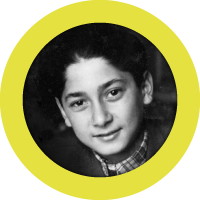
The Štaubs have been able to avoid the deportations of 1942 by hiding during roundups. Now, after a brief reprieve during which deportations were halted, the government is threatening to resume the transports. Irene has a sister living in Kassa, Hungary, just 20 miles away from Prešov. The situation seems much safer on the Hungarian side, so Irene and Frici Štaub hire a smuggler to take Oscar across the border to live with Irene's sister's family.
The number of Jews living in Slovakia, estimated to have been c. 89,000 in 1940, has been reduced to around 20,000 at the beginning of 1943. More than 57,000 Slovak Jews were deported between May-October 1942; most of them have perished. Of those remaining in Slovakia, some 2,500 are interned in the three major labor camps: Sered, Nováky, and Vyhne. Some 6,000 more have fled to Hungary, the only country under Nazi influence not yet deporting Jews. Many others are in hiding or living under false identities.
Since March 25, 1942, Slovakia has deported more than 57,000 Jews, delivering them into German custody in Nazi-occupied Poland. As reports that deported Jews are being murdered by the Nazis reach the Slovakian government, President Jozef Tiso, who is an ordained Catholic priest, comes under pressure from the Vatican and other Church officials. Tiso orders deportations of Slovak Jews to camps in German-occupied Poland to cease.
The first transport of Slovak Jews—consisting of 1000 women and girls—is deported to concentration camps in German-occupied Poland. The Slovak government has agreed to pay Nazi Germany a fee of 500 Reichsmarks for every Jew deported from Slovakia, ostensibly to cover the cost of resettlement and retraining. Some 57,000 Slovak Jews are gathered into labor camps within Slovakia and, over the next seven months, deported to concentration camps in German-occupied Poland.