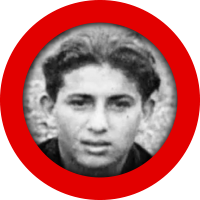
Sailing on the S.S. Marine Marlin from northern Germany, Jack is one of 928 passengers on one of the first post-war transports of refugees from Europe to the United States. They arrive in New York harbor during the night of December 22 and disembark at Ellis Island the next day.
President Harry S. Truman issues an executive order granting priority to displaced persons (DPs) for visas to enter the U.S. The order is expressly intended to help orphaned children. While it does not expand the restrictive U.S. immigration quotas, it enables some 41,000 DPs from Central and Eastern Europe – many of them Jewish – to enter the country between December 1945-July 1948.
Between November 1945 and August 1948, the United States military holds hearings of camp guards, SS officials, and other personnel from the camps at Dachau, Flossenburg, Mauthausen, Nordhausen, Buchenwald, and Mühldorf. Of the 1,672 individuals tried before a military panel rather than a jury, some 1,400 are convicted. 297 are sentenced to death and nearly the same number to life imprisonment. Jack Adler provides testimony in advance of the trials.
Nazi Germany's High Command unconditionally surrenders on 7 May to the Allies and 9 May to the Soviets. May 8 is proclaimed "Victory in Europe Day."
The first concentration camp at Kaufering is established with the arrival of 1,000 Jewish Hungarian men from Auschwitz. Kaufering will eventually become the largest subcamp complex in the Dachau system, with eleven camps located near Landsberg am Lech in Bavaria. It is also one of the most deadly Nazi labor camps: around half of the c. 30,000 prisoners sent to the Kaufering camps between June 1944 and April 1945 will die there. Prisoners in the Kaufering camps supply labor for the construction of underground aircraft production sites for the German airline industry, which has suffered heavy damage from Allied bombs.